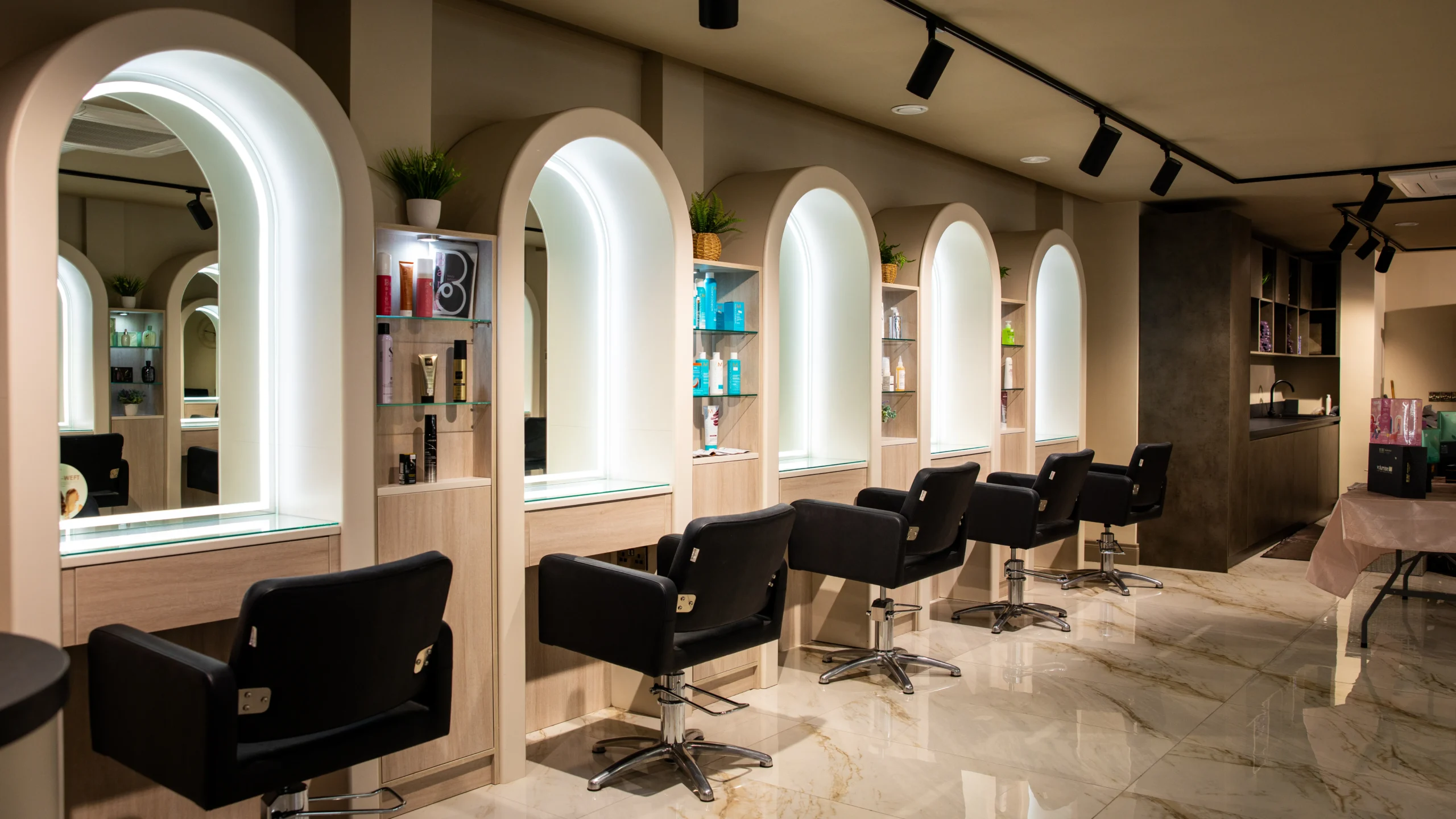
CNC Folding
A folded panel turns a corner in one piece. No edge banding on the arris, no exposed core, no pattern break where two boards meet. Here is how V-groove and fold actually works, which boards take it, and what to send us to get it priced.
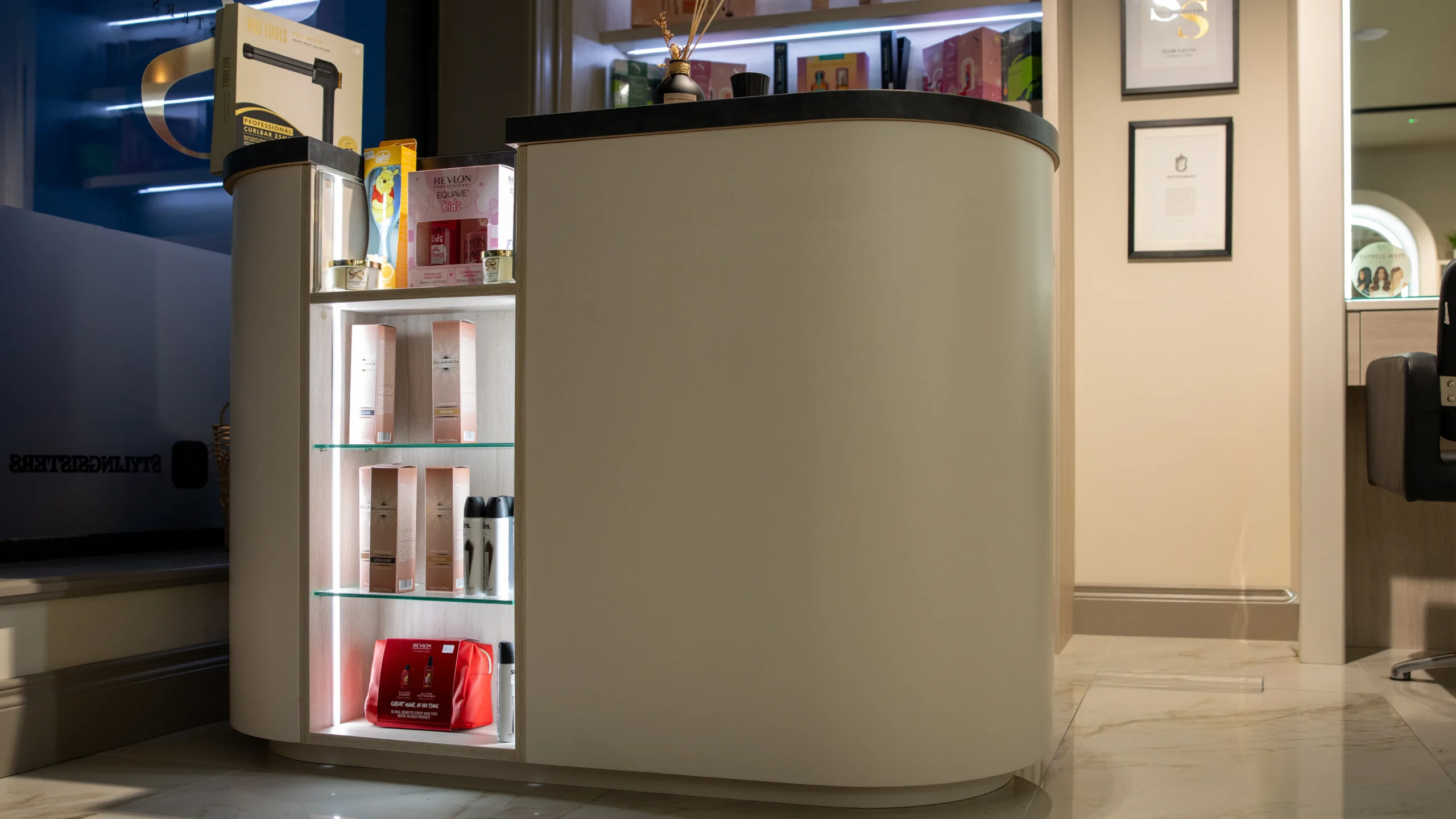

CNC folding is cutting a V-shaped groove through a board on a CNC machine, stopping just short of the face material, then folding the board along that groove to form a corner. The face laminate or veneer stays intact and acts as the hinge. Glue goes into the groove, the panel closes, and the corner sets as one continuous piece rather than two boards butted together.
It is also called V-groove and fold, mitre fold, or just folding. Whatever it is called on the drawing, the point of it is the corner. A butt joint with edge banding shows a line, a colour shift and a seam that can lift. A folded corner shows the face material carrying straight round the arris, because it is the same piece of face material on both sides.
That matters most where the corner is at eye level and finished on both faces: reception counters, display plinths, bulkheads, shop fittings, wrapped columns, and any cabinet where the end panel is on show rather than against a wall.
Driftwood NI cuts and folds sheet material from our workshop in Dunloy, County Antrim, for joiners, shopfitters, kitchen companies and fit-out contractors across Belfast and Northern Ireland.
How V-groove and fold works
The whole job is decided at the groove. Cut it too deep and the hinge tears when the panel closes. Cut it too shallow and the corner will not pull tight, leaving a soft, rounded arris instead of a sharp one.
- Set out flatThe panel is drawn as a single flat development, with every face, return and tab in one piece and the fold lines marked. What would have been four separate parts becomes one nested part.
- Cut the profileThe outline, service holes, cable ports and any fixing positions are machined while the board is still flat and still easy to hold down.
- Cut the grooveA V-cutter runs the fold lines at the angle the finished corner needs, leaving the face material and a thin skin of core intact underneath.
- Glue and foldAdhesive goes into the groove, the panel is folded up, and the corner is held until it cures. The face material closes over the arris.
- Clean upSqueeze-out is cleaned off, and the panel goes on for edging, drilling, spraying or assembly depending on what the job needs.
Because the part is developed flat, folding usually reduces the number of components rather than adding a step. One folded panel replaces a base, two returns and the edging on all three, which is fewer parts to machine, fewer to handle and fewer to line up on site.
Groove angle sets the corner
The rule is simple: the included angle of the groove equals the angle the panel turns through. A panel that turns through 90 degrees needs a 90 degree groove. From there, every other corner follows the same arithmetic, where the groove angle is 180 degrees minus the finished internal angle.
| Finished corner | Groove angle | Where it turns up |
|---|---|---|
| 90° square corner | 90° | Cabinet boxes, counter returns, plinths, bulkheads, wrapped end panels |
| 135° obtuse corner | 45° | Splayed reception fronts, angled counter noses, display plinths |
| 120° corner | 60° | Hexagonal columns, feature pods, faceted wall units |
| Continuous curve | Parallel kerfs, not a V | Curved desk fronts, wrapped columns, radiused counter ends |
A curve is a different operation. Instead of one V-groove, a series of closely spaced parallel cuts is run across the back of the board so it bends rather than folds. It is usually called kerf bending, and it is how a continuous radius is formed on a counter front without a joint.
Which boards fold and which do not
Folding depends entirely on the face. The hinge is the face material, so a board with a tough, continuous, flexible face folds well and a board without one does not.
| Board | Folds | What to know |
|---|---|---|
| Melamine faced chipboard | Yes, routinely | The standard folded board. The melamine face is a reliable hinge and the corner closes crisp. |
| Laminate faced board | Yes | High pressure laminate gives a durable hinge and a hard-wearing corner, which is why it is common on commercial counters. |
| Foil or melamine faced MDF | Yes | Denser and more consistent core than chipboard, so the groove cuts cleaner. |
| Moisture resistant MDF | Yes | Same behaviour as standard MDF, specified where there is splash or humidity. |
| Veneered MDF | Yes, with care | Grain must run across the fold, not along it. Set out so the veneer continues round the corner in the right direction. |
| Raw MDF | Not on its own | No face material means no hinge. Fine once faced, foiled or laminated. |
| Plywood | Less predictable | Voids and alternating plies make the hinge inconsistent. Usually better mitred or butt jointed. |
| Solid timber | No | No continuous face to hinge on. A mitred and glued corner is the equivalent detail. |
Where a folded corner earns its place
- Reception and retail countersThe front, the return and the nose come round in one piece, so there is no seam on the most looked-at edge in the room.
- Wrapped end panelsAn exposed cabinet end that turns onto the plinth or the top without an edge-banded line down the corner.
- Bulkheads and pelmetsLong horizontal runs where a butt joint would telegraph every few metres under downlighting.
- Display plinths and podsFour faces from one board, square and self-jigging, which is quicker to build and stays square in transit.
- Columns and casingsService columns cased in one folded wrap rather than four panels scribed to each other on site.
- Drawer and cabinet boxesFewer parts to machine and assemble, with the face material continuous around the visible corners.
What to get right at drawing stage
Most folding problems are set out problems, and they are cheap to fix on the drawing and expensive to fix on the bench.
- Grain and pattern directionOn a veneered or patterned board, decide before nesting whether the grain runs up the face and over the corner, or along it. It cannot be corrected after cutting.
- Which way the panel closesMark the visible face on the drawing. The groove is cut from the back, so an inverted part folds the wrong way and the face lands inside.
- Allow for the closed cornerDimension the finished outside face, not the flat blank. The development length is worked out from the finished sizes, not the other way round.
- Fixings and services firstHoles, cable ports and fixing positions are far easier to machine while the panel is flat, so give them to us with the panel drawing rather than afterwards.
- Say where the edging goesFolded corners need no banding, but the open edges usually still do. Mark which edges are visible.
- Handling and accessA folded wrap is rigid but bulky. Check it will physically get through the door and up the stairs before it is made as one piece.
What to send when you ask for a price
Send these and you will get a price back rather than a list of questions.
- Drawings or a cutting listA DXF, DWG or a dimensioned PDF. Finished sizes, with fold lines marked if you have already set them out.
- Board and finishMaterial, thickness, colour or decor, and the face you want on show.
- Corner anglesWhich corners fold, and to what angle. If you are not sure, send the finished shape and we will work the grooves out.
- QuantityOne-off, batch, or a repeat run across several sites.
- EdgingWhich edges are visible and what banding you want on them.
- AssemblyWhether you want the panels folded and glued here, or cut and grooved flat for you to fold on site.
- DeliveryWhere it is going and whether there are access restrictions.
Folding sits alongside the rest of the machining, so most jobs come through with routing, drilling and edging on the same order. Our CNC routing in Belfast page covers the cutting side, CNC solutions Northern Ireland covers the full workshop, and CNC cutting for kitchen companies covers contract trade cutting.
CNC folding: FAQs
What is CNC folding?
CNC folding is cutting a V-shaped groove through a board on a CNC machine, stopping just short of the face material, then folding the board along that groove to form a corner. The face laminate or veneer stays intact and acts as the hinge, so the finished corner is one continuous piece rather than two boards butted together.
What is the difference between V-groove and fold and a mitred joint?
A mitred joint is two separate pieces cut at an angle and glued together, so there is always a seam at the corner. V-groove and fold uses one piece, grooved and folded, so the face material carries round the corner unbroken. Folding gives a cleaner corner with no colour break, and fewer parts to machine and align.
What angle groove do I need for a 90 degree corner?
A 90 degree groove. The included angle of the groove equals the angle the panel turns through, so a square corner needs a 90 degree V. For any other corner, the groove angle is 180 degrees minus the finished internal angle, which makes a 135 degree corner a 45 degree groove.
Which materials can be V-grooved and folded?
Boards with a tough, continuous face: melamine faced chipboard, laminate faced board, foil or melamine faced MDF, moisture resistant MDF, and veneered MDF where the grain runs across the fold. Raw MDF has no face to hinge on, plywood is less predictable because of its voids and alternating plies, and solid timber cannot be folded at all.
Can CNC folding produce a curve rather than a corner?
Not with a V-groove, which makes a sharp corner. A curve is formed by kerf bending instead, where a series of closely spaced parallel cuts is run across the back of the board so it bends smoothly. That is how a continuous radius is produced on a counter front or a wrapped column without a visible joint.
Do you supply folded panels or can I fold them myself?
Tell us which you want when you send the drawings. Panels can be folded and glued in the workshop and delivered as finished three dimensional components, or cut and grooved flat so you fold them on site, which packs smaller and gets through tighter access. Flat supply is worth considering on anything large or awkward to carry.
Folded panels, cut to your setting out
Send a DXF, a DWG or a dimensioned drawing and we will come back with a price. We cut, groove, fold and finish sheet material in our own workshop in Dunloy, County Antrim, for joiners, shopfitters, kitchen companies and fit-out contractors across Belfast and Northern Ireland.
Request a Folding Quote